

Hawaiian Real Estate as an Asset (Part 1) — A Place to Enjoy, An Asset to Preserve Wealth
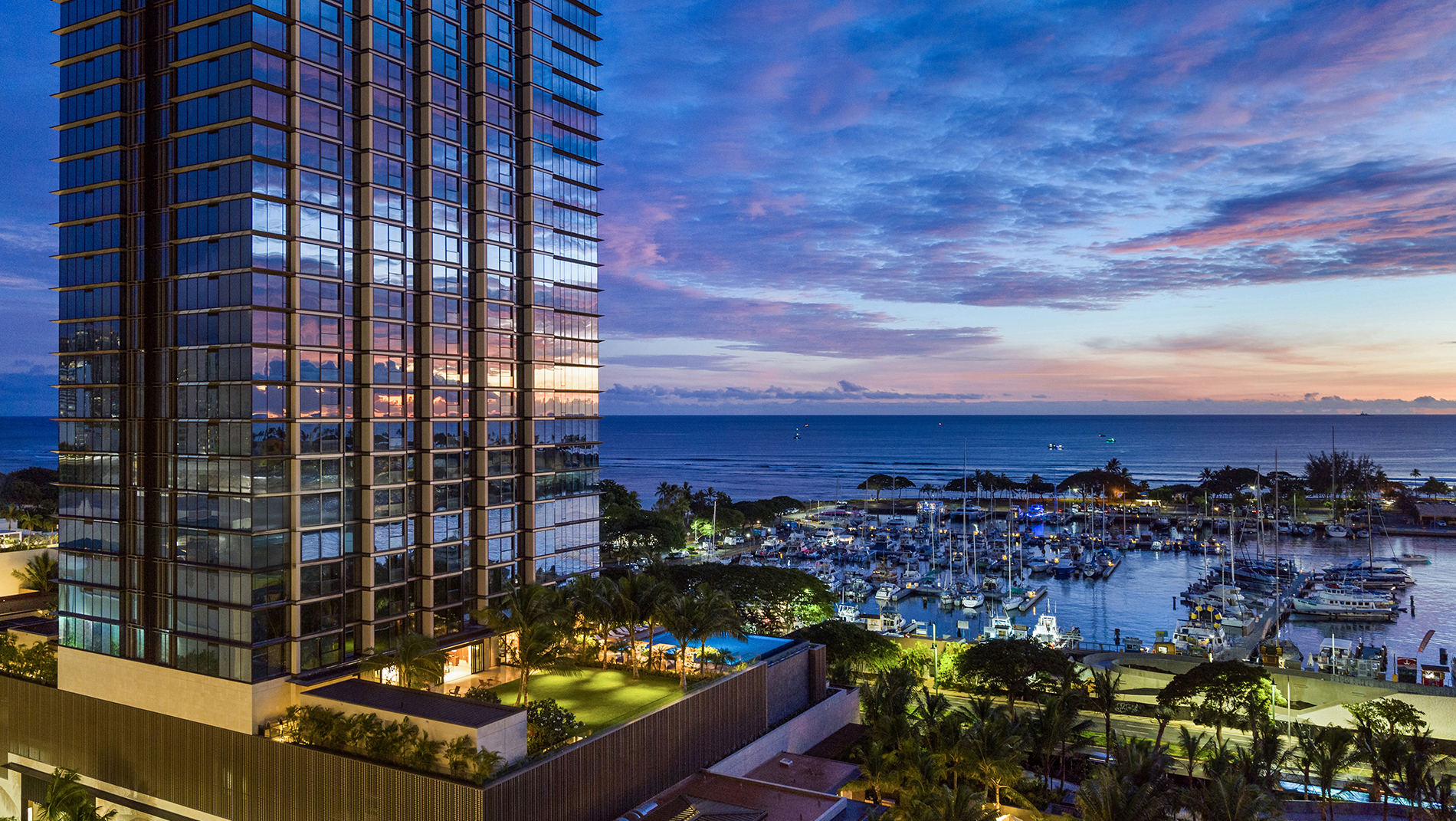
When people think of Hawaiian real estate, many picture a vacation home or a second residence. Indeed, captivated by its turquoise waters and year-round mild climate, countless people dream of owning a place in Hawaii someday.
At the same time, Hawaiian real estate has long attracted global attention not only as a resort residence, but also as a means of preserving wealth. What is it that has made Hawaii's property market such an enduring choice for investors and homeowners alike?
What Makes Hawaii So Endlessly Appealing to People Around the World
.webp)
Hawaii's appeal lies, above all, in its exceptional natural setting. With its year-round mild climate, breathtaking beaches, and lush landscapes, alongside a vibrant blend of cultures, it remains one of the world's most desirable destinations. For many, it is a place they long to return to again and again.
For Japanese travelers in particular, Hawaii holds a special place. It is relatively easy to reach from Japan, with only a modest time difference, and offers a wide range of Japanese-language services, providing a reassuring sense of familiarity despite being overseas.
For these reasons, Hawaii continues to be valued not simply as a vacation destination, but as a place to enjoy extended stays and create lasting memories with family.
The unique constraints of island geography continue to support real estate values
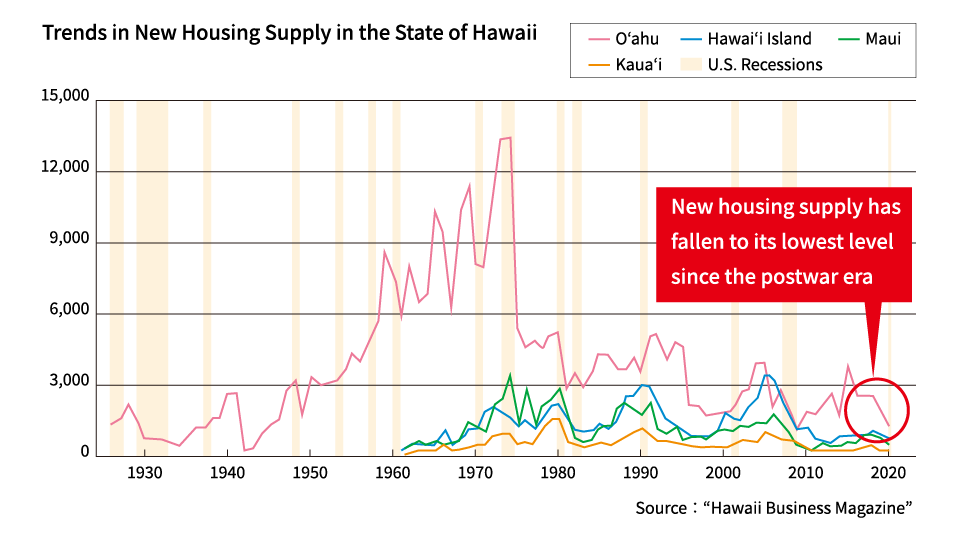
Hawaii is also known for a real estate market where prices tend to be resilient and grow gradually over time. The reason lies in a structure of strong demand and limited supply.
First, let us consider demand. As Hawaii has established an enduring brand as a tropical resort destination, people around the world seek property there—not only from Japan, but also from the U.S. mainland, Canada, and across Asia. This broad base of demand makes the market less vulnerable to the economic conditions or demographic trends of any single country.
Supply, on the other hand, is inherently constrained. Hawaii is an island state, and land is finite. In particular, oceanfront areas and highly convenient locations have limited room for new development. As a result, real estate in desirable areas is unlikely to see a sudden increase in supply.
Stable demand, combined with limited supply, helps preserve the scarcity value of Hawaii real estate. While this is a general tendency and does not guarantee that prices will never decline, from a long-term perspective, Hawaii is widely regarded as a market where value is relatively easy to sustain.
Despite Limited Supply, Hawaii Remains Less Overheated Than Tokyo
.webp)
Some prospective buyers may assume that a property with strong long-term value retention comes at a premium. Indeed, real estate prices in Hawaii are among the highest in the United States.
But how does Hawaii compare with Tokyo, the market most familiar to Japanese buyers, where prices—particularly for luxury condominiums—have risen dramatically? According to the UBS Global Real Estate Bubble Index 2025, Tokyo received a bubble risk score of 1.59 (with scores above 1.5 classified as high risk), making it the world's second-highest-risk housing market. Hawaii is not included in the report, so a direct comparison is not possible. Even so, no major market analysis has suggested that Hawaii is experiencing the same level of overheating as Tokyo.
In recent years, Tokyo has attracted attention for its rapid price appreciation. Hawaii, by contrast, has long been valued not for short-term price gains, but for its long-term appeal, supported by finite land supply and sustained global demand.
Oahu, Home to the State Capital Honolulu, Remains the Center of Demand
.webp)
Oahu remains Hawaii's most sought-after island, particularly the areas around Honolulu and West Oahu.
As Hawaii's capital, Honolulu was developed early, leaving little room for new construction and making its real estate highly scarce. It is home to many of the island's most desirable neighborhoods, including Waikiki, famed for its beaches, shopping, and resorts; Ala Moana, a popular residential district; Kaka'ako, known for its luxury condominiums and modern redevelopment; and Kahala, one of Hawaii's most prestigious residential enclaves.
West Oahu, by contrast, has emerged as one of the island's fastest-growing areas. Communities such as Ko Olina and Kapolei are seeing continued investment in resorts, retail, and residential developments, supported by steady population growth and strong future potential.
Enjoy It as a Home, Preserve It as an Asset
.webp)
One of the distinctive advantages of real estate is that it can be enjoyed as well as owned. Unlike financial assets, which are held purely as investments, real estate can be experienced firsthand—whether for family vacations, extended stays, or as a base for a future dual-location lifestyle.
Owning property in Hawaii means having a home in one of the world's most desirable destinations while building a long-term asset. In an era where wealth preservation has become increasingly important, this combination offers a compelling advantage. In Part 2, we will focus on why now may be an especially timely opportunity to consider investing in Hawaiian real estate.